
Every year, as Resurrection Sunday approaches, conversations begin to swirl in certain Christian circles about whether or not Easter is “pagan.” You may have heard or read the claims: “Easter comes from Ishtar, the goddess of fertility.” “The eggs and bunnies are pagan symbols.” “Christians shouldn’t celebrate Easter because it has pagan roots.”
As an Apostolic Pentecostal believer, I think it’s time we bring some clarity to the conversation—not just to defend tradition, but to reaffirm the powerful, biblical truth behind why we celebrate the resurrection of Jesus Christ.
Where Do the Pagan Claims Come From?
It’s true that the English word Easter might have some historical associations with a springtime festival for a Germanic goddess named Eostre. But this claim is based on a single 8th-century account by the English monk Bede. There is no evidence that Christians were celebrating a pagan fertility festival when they celebrated the resurrection of Jesus.
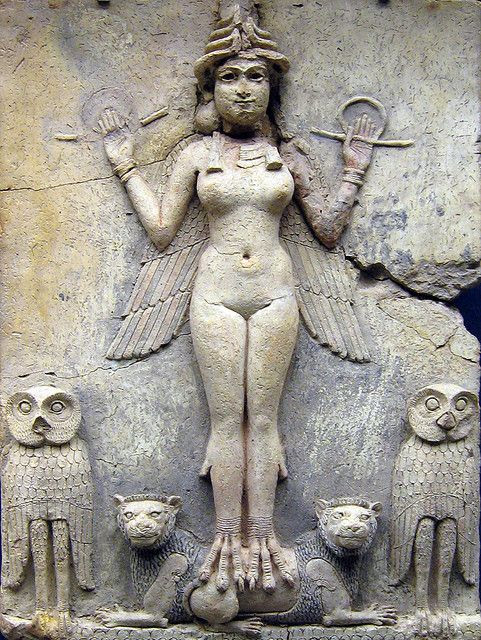
Some also try to link “Easter” with Ishtar, a Mesopotamian fertility goddess. But that connection is based only on how the words look—not on history or linguistics. Scholars overwhelmingly agree there’s no actual relationship between the two.
Yes, it’s true that eggs and rabbits have been cultural symbols of fertility and new life—but recognizing the use of a symbol doesn’t mean we’re embracing its original meaning. If that were the case, we’d need to reject wedding rings, the names of our weekdays, and even birthday candles.
My Story: From Easter Egg Hunts to Resurrection Power
I want to be transparent with you. I grew up celebrating Easter—not just as a tradition, but as a joy. I was raised in the Church of Christ and later found deep truth and power in the Apostolic Pentecostal faith.
As a kid, Easter meant hunting eggs, chocolate bunnies, and sometimes getting money in plastic eggs (those were the best!). It was fun—just that. Fun. I can assure you: I’ve never seen a single Christian bowing to a bunny or praying to an egg.
What I did witness in both faiths was a sincere desire to remember and honor the death, burial, and resurrection of Jesus Christ. We worshipped Him. As a child, I never confused the symbols with the Savior. And as adults, we shouldn’t either.
What Does the Bible Say?
The Apostle Paul addressed these kinds of issues—where some believers held convictions about holy days, while others did not. He didn’t rebuke either side but instead emphasized personal conviction, accountability to God, and charity among the brethren.
“One person esteems one day above another; another esteems every day alike. Let each be fully convinced in his own mind. He who observes the day, observes it to the Lord; and he who does not observe the day, to the Lord he does not observe it…”
— Romans 14:5–6 (NKJV)
Dr. David K. Bernard, General Superintendent of the United Pentecostal Church International, offered wise words on this very topic on his podcast:
“Some people say we’re celebrating paganism. If you’re truly doing that—or if the people you’re associated with truly think you’re promoting idolatry or pagan worship—then you shouldn’t celebrate.
But if you say, ‘Regardless of the connotations from secular culture or some of the origins, I’m not doing this for any pagan reason. I’m not worshiping any idol, and I’m not encouraging anyone to do so. I have chosen this day to celebrate the Lord,’ then you have transformed that meaning into something that is acceptable.”
This beautifully echoes what Paul said: it’s not about the day—it’s about who and why we worship.
When Did Christians Start Celebrating Easter?
The resurrection of Jesus has always been central to the Christian faith. As early as the 2nd century, Christians were already observing a special annual celebration of the resurrection.
Church historian Eusebius of Caesarea records that by the late 100s A.D., there was a disagreement among church leaders—not over whether to celebrate the resurrection, but when to celebrate it.
“There was a considerable discussion raised… about the day on which the Pascha [Passover/Easter] ought to be observed… The churches of Asia, guided by an older tradition, maintained that it should be observed on the fourteenth day of the moon… But it was not the custom of the churches in the rest of the world.”
— Eusebius, Church History, Book 5, Chapter 23
In A.D. 325, the Council of Nicaea addressed this ongoing dispute and settled on a unified method for determining the annual date of the resurrection celebration.
While Apostolics do not affirm the theological compromises that came out of Nicaea—such as creedal formulations and early seeds of Trinitarian doctrine—it’s worth noting that the decision regarding the date of celebrating the resurrection was administrative in nature. It simply reflects how early and widespread the practice was, even before the institutional Church began to drift from Apostolic doctrine.

Why We Celebrate
We aren’t celebrating spring. We’re not practicing pagan rituals. We’re celebrating the resurrection of Jesus Christ—the cornerstone of our faith!
As Apostolics, we preach the Acts 2:38 message. But we also know that without the resurrection, there would be no power in our message. The gospel we preach is based on His death, burial, and resurrection (1 Corinthians 15:1–4). That resurrection life is what we experience when we receive the Holy Ghost.
So yes, we celebrate—and we celebrate boldly!
Redeeming What the World Corrupts
Does the world commercialize Easter? Sure. Just like it does with Christmas. But instead of running from it, we reclaim it. We bring the focus back to Jesus—the risen Savior. The empty tomb. The life-giving Spirit.
If anything, Easter is a wide-open door for us to share the real reason for the hope we have (1 Peter 3:15). It’s a moment when even the unchurched are curious. So let’s use it!
Final Thoughts
This isn’t about eggs, bunnies, or tradition. This is about Jesus.
If your conscience tells you to skip Easter, follow that. But don’t shame those who celebrate the resurrection with joy, reverence, and evangelism. We aren’t practicing paganism—we’re proclaiming resurrection power!
And that’s worth celebrating—every single year.
Source citation:
Eusebius of Caesarea. Church History, Book 5, Chapter 23. Translated by Arthur Cushman McGiffert. Available at: https://www.newadvent.org/fathers/250105.htm
 Apostolic Insights
Leave a comment